Chapter 1 - Introduction to SDLC
What is the Software Development Lifecycle (SDLC)?
The Software Development Life Cycle (SDLC) is a structured process used by software developers to build high-quality software applications and manage projects efficiently. It divides software development and maintenance into distinct phases, providing a clear roadmap for teams to follow.
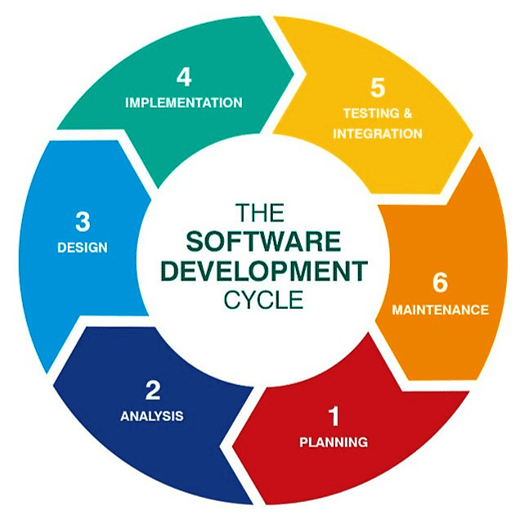
Source: K21Academy
SDLC Phases
1. Planning
Define the project scope, technical and business needs, and any constraints.
2. Design
Analyze the requirements to create practical solutions to solve the defined problems.
3. Implement
Developers write code to achieve the project’s design goals.
4. Test
Use automated and manual testing methods to identify bugs or errors in the software.
5. Deploy
Release the completed software into a production environment for user access.
6. Maintain
Continuously update and support the software to address issues and improvements.
Benefits of SDLC
- Structured project management aligned to product goals
- Improved communication and collaboration between teams
- Built-in risk mitigation throughout each phase
- Reduces human error through rigorous testing
- Enables faster, more secure, and reliable software delivery
Common SDLC Methodologies
| Methodology | Description | Use Cases |
|---|---|---|
| Waterfall | A linear approach where each phase must be completed before moving to the next. | Ideal for small, well-defined projects with fixed requirements. |
| Iterative | Builds software in small parts, allowing feedback and revisions after each iteration. | Useful when early versions are expected to evolve based on user feedback. |
| Agile | A flexible, iterative approach that emphasizes collaboration, customer feedback, and frequent updates. | Best for dynamic, fast-paced projects with evolving requirements. |
| Scrum | A subset of Agile, focusing on time-boxed iterations called sprints and daily stand-up meetings. | Great for product-based development with frequent releases and tight deadlines. |
🧠 Knowledge Check
Answer the questions below to test your knowledge!